Asymmetric board games, explained: different powers are not different games
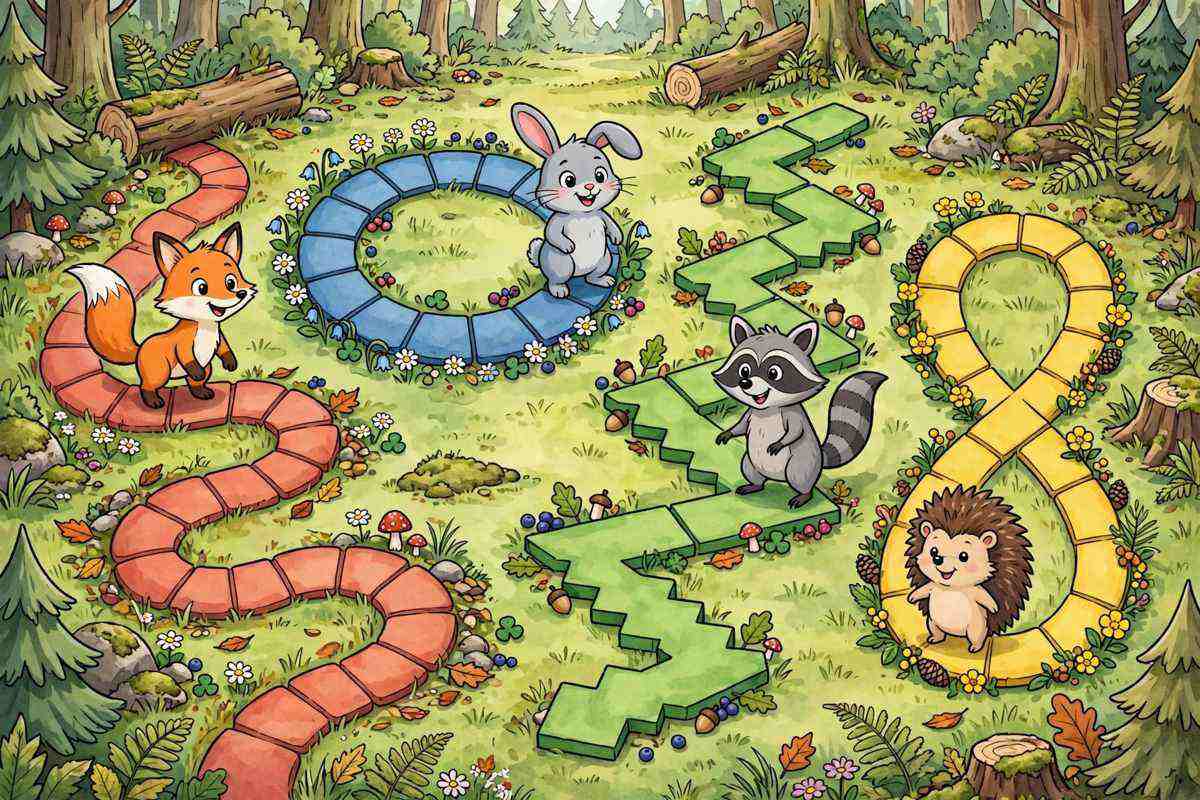
30 victory points wins a game of Root, unless a dominance card wins it sooner. That single sentence hides the whole subject. The cats reach 30 by building. The birds score from the roosts standing at Evening. The alliance scores by spreading sympathy across the map. The vagabond scores by questing and by picking sides. Four players, one board, one target number, and four scoring systems that barely overlap. That is full asymmetry, and it is a very different purchase from a game where everyone plays the same rules and one player simply starts with a bonus.
The argument about the word asymmetric
Part of the confusion is that the hobby uses two definitions at once. BoardGameGeek treats variable player powers as an umbrella term, covering any game that grants different abilities or paths to victory. Under that definition, almost every modern game with factions qualifies, and the label stops telling a buyer anything useful.
Other writers argue the distinction is one of kind, not degree. Variable player powers keep everyone playing the same game, with basically the same rules and the same victory condition, while one ability or starting advantage tilts each seat. An asymmetric game gives players fundamentally different mechanisms and different experiences, sometimes different victory conditions as well. Cosmic Encounter is the standard example of the first camp even under the stricter definition: players mostly share the rules and the objective, and each alien power bends that shared game. Root is the standard example of the second. Both definitions are in circulation, which is why a box can promise asymmetry and deliver a starting bonus.
The facts box: one bent rule versus four games
Cosmic Encounter, designed by Peter Olotka, Jack Kittredge, and Bill Eberle with Bill Norton, was originally published by Eon Games in 1977. Each player takes an alien species with a unique power to bend or break one of the rules of the game. Most editions are designed for 3 to 5 players, and the Fantasy Flight Games edition of December 2008 included 50 aliens with support for 5 players. One elegant limit keeps the powers honest: an alien power is active only while its player holds three or more colonies in their home system, so losing ground can switch the power off.
Root, full title Root: A Game of Woodland Might and Right, is a 2018 asymmetric strategy wargame designed by Cole Wehrle, illustrated by Kyle Ferrin, and published by Leder Games, listed at ages 10 and up with a playing time of 60 to 90 minutes. The base game holds four factions, the Marquise de Cat, the Eyrie Dynasties, the Woodland Alliance, and the Vagabond. Every turn, whatever the faction, runs through the same three stages printed on the faction board: Birdsong, Daylight, and Evening. Underneath the different Daylight actions sits a shared skeleton. All players draw from a shared 54 card deck, and a clearing is ruled by whoever has the most combined warriors and buildings there, with one exception: on a tie nobody rules, except the Eyrie, who rule even on a tie.
| Spectrum point (verified Nov 16, 2026) | Cosmic Encounter | Root |
|---|---|---|
| What differs | One alien power per player, bending or breaking one rule of a shared game | Actions, scoring path, and board presence differ by faction |
| Victory condition | Shared objective for the table, pursued with an individual power | Shared target of 30 points, or a dominance card, reached by faction specific scoring |
| How each side scores | Through the common encounter system, modified by the power | Cats by building, Eyrie from roosts at Evening, Alliance by spreading sympathy, Vagabond by quests and relationships |
| Teach shape | Teach one game, then read out one power per player | Teach a shared skeleton, then teach each faction at the table separately |
| Players and time | Most editions 3 to 5 players; 50 aliens in the 2008 Fantasy Flight edition | Base box 2 to 4 players, 60 to 90 minutes once factions are known |
The spectrum test to run at the shelf
Three questions sort any game sold as asymmetric, and they take about a minute with the box and a rules summary.
One, what exactly differs? If the answer is a starting resource, a discount, or a single special ability inside identical turns, that is variable player powers. A good purchase, possibly, but price it as one game, not several.
Two, does the scoring differ, or only the route? Root passes this test hard. Building, roosts, sympathy, and quests are not four routes up one hill, they are four hills sharing a map. A game where every faction scores the same points for the same actions, just at different efficiencies, sits much closer to the symmetric end.
Three, could you teach a second seat from your own knowledge? In Cosmic Encounter, broadly yes, the game under the powers is one game. In Root, no. Learning one faction teaches one faction, not Root, and that sentence, from a Root guide, is the most honest line in the whole category. If the answer to question three is no, the group is buying several games in one box and should budget the learning time for several games too.
The teach bill, stated plainly
Listings put Root at 60 to 90 minutes, and a Root guide is careful to add the condition: that is the length once everyone knows a faction. A first game runs closer to two hours. The gap is not setup or slow play. It is instruction, repeated per seat, plus the extra instruction nobody plans for, teaching each player enough about the other factions to make sensible decisions against them. Knowing how the Eyrie scores from roosts changes what a cat player should attack. That cross teaching is part of the game, not an optional extra.
Player count changes the bill as well. The base box plays 2 to 4. At three players, the Vagabond sits out. At two, the Woodland Alliance sits out too, leaving cats against birds, the tightest version of the map. Wider listings of 2 to 6 players rely on expansion factions and later material, so a group of five buying the base box for a full table is buying the wrong box. Check the count on the edition in front of you, not the count on a listing that bundles expansions in.
A note on procedure: this is a buying decision explainer, so it carries a decision framework and the spectrum test above rather than a how to fix procedure. What success looks like is a group that can name, before paying, which point on the spectrum the game occupies and how many factions its first evening can realistically teach.
A first game faction order for Root
Seat a new group in this order, and hand the seats out in this sequence as players gain experience:
- Marquise de Cat first, for the newest player. Faction coverage describes the Marquise as the most straightforward seat, building sawmills, workshops, and recruiters, scoring for each building built, with more points for specialising in one building type. The job reads directly off the board.
- Eyrie Dynasties second. The Eyrie scores at the end of each turn from the roosts on the board, a visible, countable income. The growing set of forced actions is the complication, and it lands better on a player who has already watched one full game turn cycle.
- Woodland Alliance third. Scoring by spreading sympathy tokens means playing a slower, less visible game that depends on reading where the table is ignoring. That judgement is hard to borrow in a first session.
- Vagabond last. A lone piece scoring through quests, exploring ruins, and improving relations with the other factions asks its player to understand every other faction at once. It is the seat most likely to be misplayed quietly, and the most rewarding once the table is understood.
Who will love it, who should skip it
Full asymmetry rewards a stable group that plays the same game repeatedly. The second and third sessions are where Root pays back its teach bill, as factions swap seats and the table starts policing the leader from knowledge instead of guesswork. Groups that meet rarely, or rotate new players in constantly, will keep paying first game prices for a game priced for veterans.
Choose Cosmic Encounter when the group wants the flavour of difference with a shared ruleset underneath, one power to learn per player and a game that has been bending its own rules since 1977. Choose Root when the group wants genuinely different games in collision and will commit several evenings to one box. Skip full asymmetry entirely where the evening has a hard stop, where one confident teacher would end up running every seat, or where balance must be obvious on sight. In an asymmetric game, balance is something a table discovers over plays, and a group unwilling to make that discovery will read discovery as unfairness.
— Rex Bennett, Entertainment Writer